

My husband says that I continuously preach salon sanitation. That’s why I’m so GRATEFUL for Corona! Why on earth would I say that?
COVID and other recent outbreaks have raised awareness of the importance of public health, safety, and hygiene.
I’ve lived in lands where salon cleanliness isn’t always up to par with regulated countries, so I want to review some basics you may already know from your continuing education.
I want to reassure the public about what measures are taken to ensure our salons are safe.


We will consider in this article:
- Is a Disinfectant like Barbicide adequate for killing Fungus and scabies?
- Is Barbacide safe?
- How do you mix Barbicide?
“Clean, sanitize, and disinfect are often used interchangeably. The distinction “to clean” refers to scrubbing with soap and water, whereas “sanitizing” and “disinfecting” kill germs and bacteria via chemical means. Typically, disinfectants kill more germs than sanitizers.”
merriam-webster.com
For better comprehension in the salon setting, we’ve replaced “Sanitize” with “cleaning & disinfecting”.

YES! Barbicide and Barbicide TB are approved by the EPA to disinfect salons from the coronavirus and other pathogens. Barbicide can clean most salon surfaces, tools, and equipment.
The correct dilution is essential to be effective against pathogens, save money, and prevent damage.

Running the disinfectant solution for 20 minutes through the jets is crucial for items like foot spas, so don’t just leave it soaking.
Corona is only ONE danger lurking in your Salon.
Besides the CoronaVirus, what other dangers will proper salon disinfection prevent?
- HIV can live in dried blood at room temperature for six days and if wet for weeks.
- Hepatitis C virus (HCV) can remain infectious for up to 6 weeks on surfaces at room temperature. HIV.gov
- *Fungus: Tinea (ringworm/ jock itch, athletes foot), Yeast, These fungal spores can live for as long as 12 to 20 months in the right environment. healthline.com
- *Parasite infestations: Lice, scabies
- *Staphylococci: (Present in skin abscesses, pustules, and boils) Methicillin-resistant Staphylococcus aureus (MRSA) can survive on some surfaces, like towels, razors, furniture, and athletic equipment for hours, days, or even weeks. CDC.gov
- *Streptococci: (Found in blood poisoning) can survive on a dry surface for 3 days to 6.5 months canada.ca
- Diplococci: Causes pneumonia
- Gonococci: Causes gonorrhea
- *Meningococci: Causes meningitis
- Bacilli: Produces tetanus, influenza, diphtheria, typhoid, and tuberculosis
- *COVID-19
- How long does the coronavirus last on surfaces?
- Current evidence suggests that coronavirus remains active on surfaces made from various materials for hours or days. Cleaning visibly dirty surfaces, followed by disinfection, is a best practice for preventing COVID-19 and other viral respiratory illnesses.
- How long does the coronavirus last on surfaces?
**NO salon should service a person under treatment for or who is suspect of, highly contagious bacterial infections, viruses, fungal, or parasites infections. Especially those that are manifested on the skin.
Dirty hands and unclean objects can transmit pathogens through breaks or wounds in the skin.
Killing pathogens is much more accessible outside the body. Once they enter the body, they are much harder to fight, and we may become severely ill.
Your salon might incur liability for spreading infection.
How to properly disinfect your salon and home with Barbicide
Clean (or Sanitize)
The appropriate and adequate way of disinfection is a 2-step process
- Clean the visible signs of dirt and debris by washing with detergent and water.
- Then, non-porous items are ready for disinfectant.
A “Non-porous” surface or object, such as metal, glass, and plastic, DOESN’T allow liquids to pass and be absorbed. “Porous” materials DO. Porous or absorbent items are considered disposable and are only for one-time use. Unfortunately, not everything is sanitizable.
Permeable items include all nail files and emery boards unless they are made entirely of metal or glass. Absorbent objects also include, but are not limited to, pumice stones, buffing blocks, orangewood sticks, cotton, toe separators, and flip-flops.
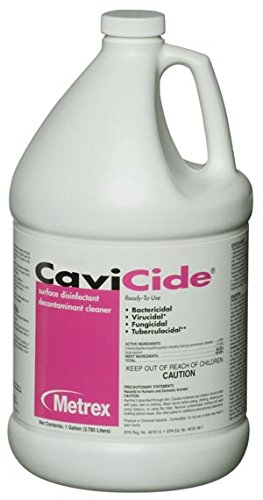
Pro Tip:
in some cases, certain items can be kept for a specific client in a sealed ziplock bag, with their name written on the outside. Under NO circumstances should it be used on a different client.
Disinfection
- “To Disinfect” means making non-porous items safe for use.
- Disinfection is accomplished by using an EPA-registered chemical agent to kill or denature a pathogen for the amount of time required (moist contact) for the disinfectant to be effective against the pathogens on the label.
Sterilization
Sterilization refers to something entirely free of contamination.
An Autoclave is an example of how sterilization is achieved. It uses heat and pressurized steam to decontaminate.

Tuttnauer– Autoclave For Small Offices
High-temperature sterilizers, which use dry heat to sterilize, are a great way to decontaminate skincare tools, scissors, or other tools generally made from stainless steel.
Ultrasonic cleaners combine heat and sound to remove the buildup of debris while killing microbes. Another plus is they are more affordable than an autoclave.

Storage
So once your items have been cleaned and properly disinfected or sterilized, you must keep them clean until the following use.
- According to US law, ultraviolet light is not an approved form of disinfection. However, it is an acceptable form of storage and helps keep your tools safe from airborne contaminants.

Other Available Salon Disinfecting Essentials
Of course, wipes are the simplest way to clean your station, salon chairs, and other surfaces touched by clients. The active ingredients in hospital-grade disinfectant wipes are mixed with isopropyl, requiring less contact time.
Disinfectant Sprays are the next best thing to Wipes and are more cost-effective. They generally require more contact time to be effective against pathogens.
FAQ: Can I use Barbicide in a spray bottle?
YES, As long as you properly mix your Barbicide solution, you can use it as a disinfecting spray. And don’t forget about wet contact time.
Tools
Some tools, like clippers, can’t be cleaned with soap and water or submerged in a Barbicide solution because they will rust. Isopropyl alcohol is flammable and doesn’t lubricate clippers. Therefore, All-In-One Clipper Spray disinfectant was invented.
Andis Cool Care Plus For Blades

In conclusion:
Barbicide can disinfect and kill COVID-19 and most other pathogens in your salon. However, you must always mix according to the instructions and use appropriate contact time.
In some situations, you may also need other sterilization and storage equipment.
As an Amazon Associate, I get a small commission for qualifying purchases. Thank you! for your support.